Wordle's Best Starting Words: A Deep Dive into Stats & Theory
The quest for the perfect Wordle starting word is a pursuit almost as engaging as the puzzle itself. Millions of players worldwide, tackling daily challenges from the very first inception to today's latest iteration like
wordle puzzle #1722, consistently ask: what's the ultimate opener? While specific data for a singular puzzle number like #1722 isn't available, the underlying statistical and theoretical principles that govern optimal starting words apply universally to every Wordle challenge. This comprehensive guide delves into the data-driven strategies, from simple green-counting to advanced information theory, to help you make your first guess your best guess, ensuring you conquer any Wordle puzzle with confidence.
Understanding Wordle's Mechanics and Wordlists
Before we dissect the best starting words, it's crucial to understand the battlefield. The official New York Times Wordle site operates with two distinct wordlists:
- Guessable Words: A much larger list, typically around 12,974 words, that you can input as a guess. This includes many less common words.
- Answer Words: A curated, smaller list of 2,309 words that can actually be the solution. These are generally more common, everyday words.
This distinction is vital because the statistical analysis of a starting word's effectiveness can be skewed depending on which list is used as the basis for calculation. Some analyses look at how well a word performs against *all* guessable words, while others focus purely on the *answer* list. The latter is usually more pertinent for players aiming to solve the puzzle. It's also worth noting that different Wordle-like websites might use entirely different wordlists, which can significantly alter the performance metrics of any given starter word.
The Myth of the Unwinnable Game: Guaranteed Wins?
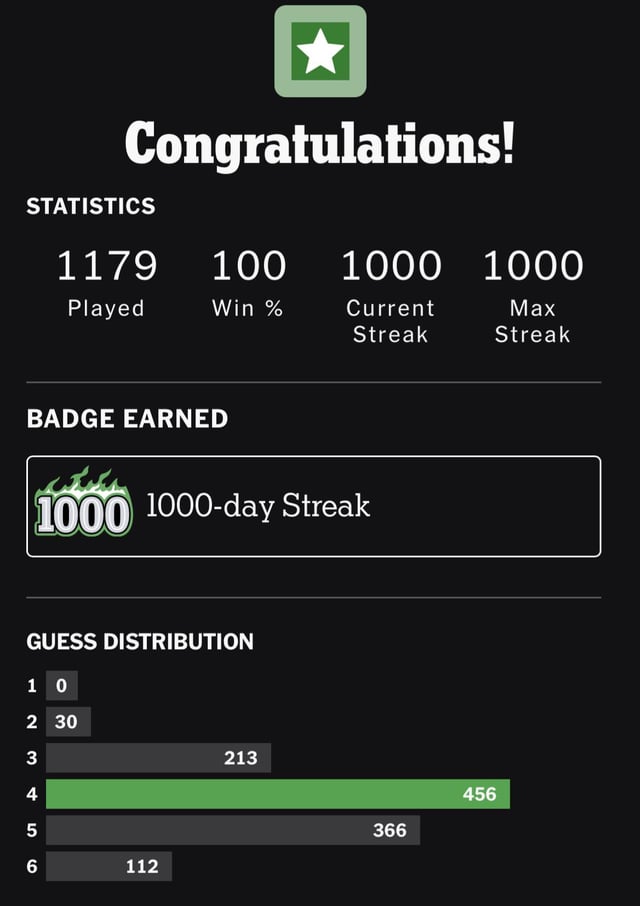
One of the most common anxieties among Wordle players is preserving their winning streak. Many wonder if a "bad" starting word could doom their game from the outset. The good news? If you play optimally, almost any starting word can guarantee a win 100% of the time. Yes, even words widely considered suboptimal, such as
QAJAQ – which scores poorly by most metrics due to its uncommon letters and vowel structure – can still lead to a victory if subsequent guesses are made strategically.
This principle holds true even in Wordle's challenging Hard Mode, with only a few rare exceptions. Optimal play involves leveraging every piece of information from your guesses – greens, yellows, and grays – to systematically narrow down the possibilities until only one answer remains. The initial word merely sets the stage; it's your ability to adapt and deduce that truly secures the win. For a deeper dive into how to consistently secure your streak, explore our article on
Guaranteed Wordle Wins: How Optimal Play Keeps Your Streak Alive.
Ranking Strategies: Greens vs. Information Theory
So, if a win is almost always guaranteed with optimal play, how do we differentiate between good and great starting words? The answer lies in efficiency: which words help you solve the puzzle in the fewest guesses? Two primary metrics stand out in the statistical analysis of starting words: the average number of "greens" a word produces, and its "information theory" value.
The "Greens" Metric: A Simple Approach
A straightforward way to evaluate a starting word is to count how many "greens" (correct letter in the correct position) it yields on average across all possible answer words. The logic here is simple: more greens mean more direct hits, which intuitively feels like a better start.
Based on analysis of the official NYT answer list, here are some of the top performers by average greens:
- Saree: 0.680814
- Sooey: 0.679515
- Soree: 0.669987
- Saine: 0.666522
- Soare: 0.65916
When specifically looking at words that are *also* on the answer list (making them potential solutions themselves), the top words for average greens include:
- Slate: 0.620182
- Sauce: 0.608922
- Slice: 0.607622
- Shale: 0.60589
- Saute: 0.604158
While these words are decent, focusing solely on greens has limitations. Greens provide *some* information, but yellows (correct letter, wrong position) and even grays (letter not in the word) are equally crucial. Furthermore, not all greens are created equal; a green 'E' might be less informative than a green 'X' simply because 'E' is so common. This leads us to a more sophisticated metric.
Information Theory: The Deeper Dive
Information theory offers a more robust way to evaluate a starting word by quantifying how much a guess narrows down the set of possible answers. Pioneered for Wordle by mathematician 3blue1brown, this method measures the "bits" of information gained from a guess, averaging it across all possible outcomes. Essentially, it assesses a word's ability to eliminate the largest number of potential answers, regardless of whether it yields greens, yellows, or grays.
By this metric, the words that provide the most information are often those that use common letters in common positions, but also distribute them efficiently to test a wide range of possibilities.
Here are the top starting words based on information theory:
- Soare: 5.8852 bits
- Roate: 5.88486 bits
- Raise: 5.8783 bits
- Reast: 5.86774 bits
- Raile: 5.86515 bits
Focusing on words that are themselves on the answer list, the top performers by information theory are:
- Raise: 5.8783 bits
- Slate: 5.85582 bits
- Crate: 5.83522 bits
- Irate: 5.8328 bits
- Trace: 5.83043 bits
Notice the overlap between the greens list and the information theory list (e.g., SOARE, RAISE, SLATE). This demonstrates that words effective at generating greens often also provide substantial information. However, information theory is generally considered superior because it accounts for *all* feedback, making it a more comprehensive measure of a word's true power to reduce uncertainty. For a detailed comparison of these two ranking methodologies, see our article on
Greens vs. Information Theory: Ranking Wordle's Top Starter Words.
Beyond the Stats: Practical Tips for Choosing Your Starter
While the statistics provide an excellent foundation, practical considerations and personal preferences also play a role in selecting your ideal starting word.
- Maximize Common Letters: Look for words containing the most frequently used letters in the English language: E, A, R, I, O, T, S, L, N. Words like "RAISE," "CRANE," or "SLATE" are popular for a reason – they hit many common letters in typical positions.
- Optimal Vowel Distribution: A good starter word typically includes 2-3 vowels. Words with too few vowels might leave you guessing about the vowel structure, while words with too many might miss out on valuable consonant information.
- Avoid Duplicate Letters (Initially): For your first guess, try to pick a word with five unique letters. This maximizes the amount of information you can gain about different letters in a single turn. For example, "CRANE" uses C, R, A, N, E, all common and distinct.
- Consider Letter Positions: Some letters are more common in certain positions (e.g., 'S' at the beginning, 'E' at the end). Words that place these letters strategically can give you an edge.
- Balance Theory with Intuition: While "SOARE" or "RAISE" might be statistically optimal, some players prefer words they find easy to remember or those that feel intuitively strong. The best starting word for *you* might be one that combines statistical advantage with personal comfort.
In the end, the "best" Wordle starting word isn't a single, universally agreed-upon answer, but rather a spectrum of highly effective choices, each validated by different analytical approaches.
Conclusion
Whether you're strategizing for
wordle puzzle #1722 or any other daily challenge, understanding the nuances of Wordle's wordlists and the various metrics for evaluating starting words can significantly improve your game. While optimal play can guarantee a win with almost any starter, choosing a statistically strong word like those identified by information theory (e.g., SOARE, RAISE) or even the simpler greens metric (e.g., SAREE, SLATE) provides a considerable head start. By combining these data-driven insights with practical tips like maximizing common, unique letters and optimizing vowel distribution, you'll be well-equipped to consistently crack the code in fewer guesses, enhancing your enjoyment and keeping that coveted Wordle streak alive and well. Happy puzzling!